
Reno Club Spotlight: Georgia & David's Mid-Century Renovation
When Georgia and David bought their 1960s home in Horsham, they could immediately see its potential. But alongside the excitement came a familiar feeling for many renovators: uncertainty.
Despite having renovated before, they were facing a delayed purchase, rising building costs and hundreds of decisions that would shape both their budget and family life. Because they weren't planning a major reconfiguration and wanted to keep costs under control, they decided not to appoint an architect and instead wanted a clear framework for making renovation decisions.
They joined the How to Renovate Course & Reno Club whilst waiting for their purchase to complete and used the course to work systematically through their renovation plans. From defining their priorities to planning electrics, lighting and budgets, the course helped them make informed decisions, avoid costly mistakes and create a home that feels bright, warm and uniquely theirs.
Here's their renovation story, in their own words.
Introduce yourselves :)
We’re Georgia and David. We live with our daughter, Jess, and our elderly cat and boisterous puppy.
I’m a freelance operations manager and David is a risk engineer. We're a good renovation team because our skills complement each other. I'm usually the ideas person, always thinking about how a space could work better, while David is brilliant at working out the best way to bring those ideas to life. Between us, we tend to land on decisions that are both ambitious and achievable.
Introduce readers to your house – era, size, location, why you chose it, how much you were willing to invest on renovating it
Our house is a 1960s property in Horsham, West Sussex. It is really well-designed and embodies all the good things about mid-century design – calm, functional spaces, great light and connection to the outdoors – but it hadn’t been touched for decades and we could see the potential immediately, even though it needed a huge amount of work.
We weren't looking for a perfect house; we were looking for the right house. The layout, location and possibilities were important to us.
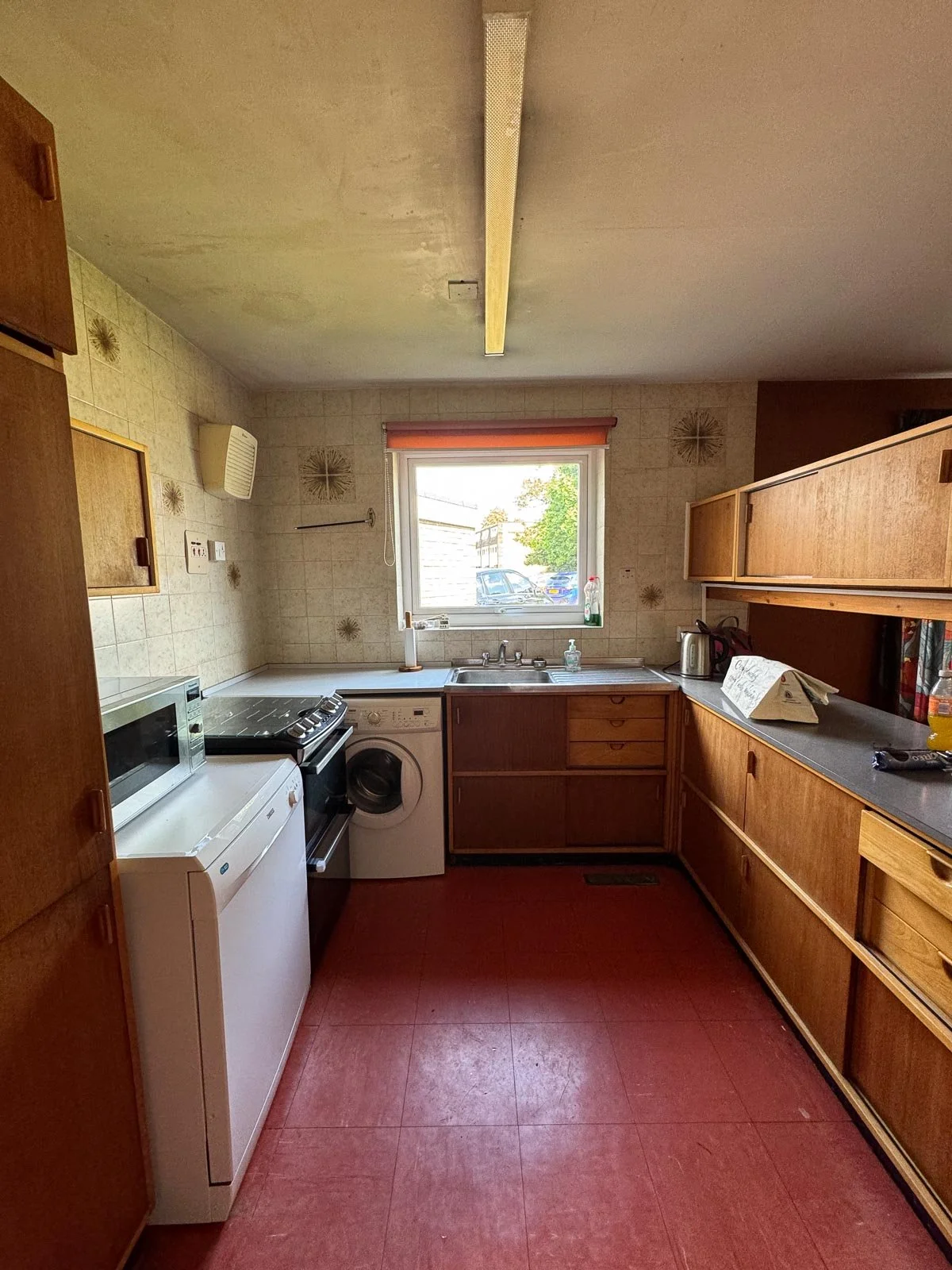
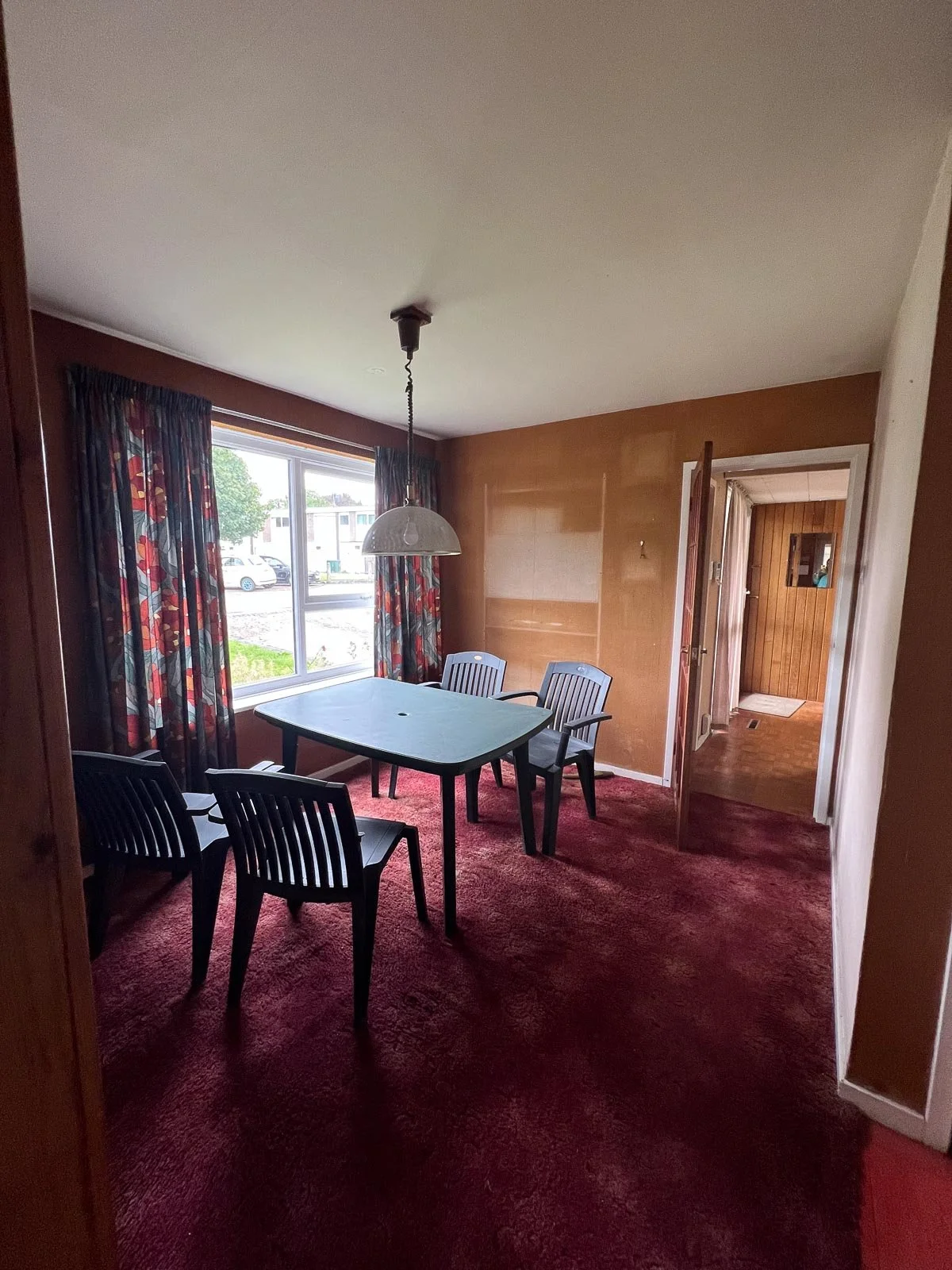
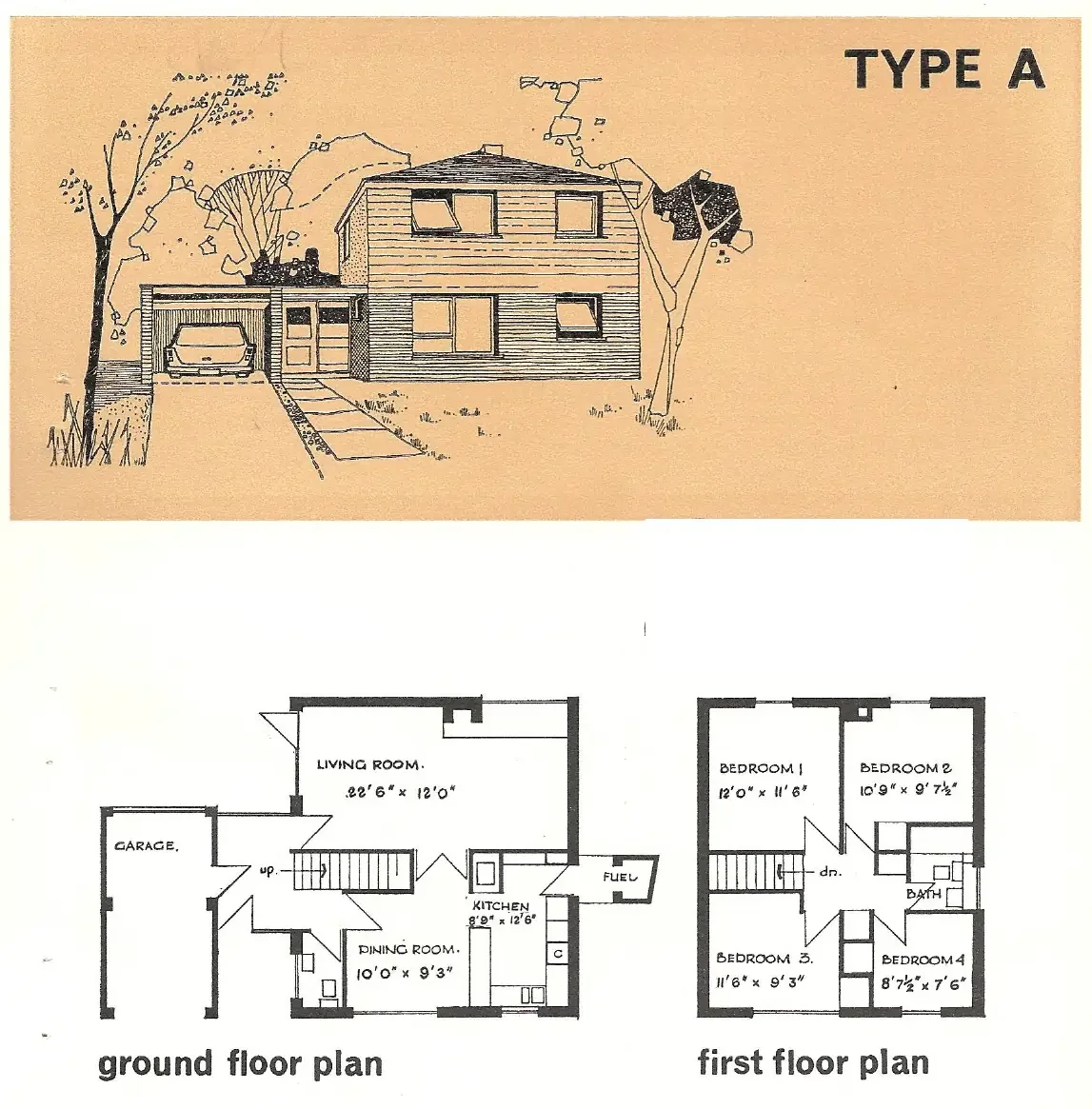
the 1967 estate agent brochure WITH originaL FLOOR PLAN
Tell us about the emotions you had about taking on a renovation, were you nervous/overwhelmed/excited?
All of the above. It was exciting because we had a lot of ideas and ambitions and what we thought was a decent budget. However, having undertaken a full renovation before, we didn’t underestimate the size of the project, the volume of decisions and the challenge of managing the building work and budget.
What was the biggest problem you faced in the early days?
We had a few challenges: firstly the purchase took 6 months longer to complete for various reasons (including probate), which really impacted our budget (we were living in a rental and paying for storage) and our ability to commit to architects and trades. Once we completed we were then paying rent and mortgage, and still only at the start of the design process. Although we knew that post-Covid building costs were much higher than our previous renovation in 2018, we were still shocked at the extent of the price increases and had to reduce our expectations.
Tell us about how you’re phasing your project – Do you have any tips for renovators about phasing a project/why it might be a good idea?
Whilst we were waiting for completion we had plenty of time to really understand what we wanted to achieve with the renovation. Our design took the entire house back to brick, so it made sense to take on the whole project in one hit. To help with the budget we did separate out a couple of items - the roof and a garage conversion.
At what stage were you at when you joined the course and why did it appeal to you? What did it help you with most?
We joined the course while we were waiting for our house purchase to go through. We decided not to engage an architect as we weren’t extending/reconfiguring and we didn’t have the budget. It was so helpful to have structure and clarity so we could work through the process in a systematic way. The budget planner, the wants and needs exercise and the electrical and lighting plan modules were absolutely invaluable.
What setbacks did the course help you to prevent?
We scaled back our plans to extend for various reasons – rising costs, the restrictions of the estate and the fact that the house is so well designed. We really thought about how the house was going to work for our family. I also went back to one of Fiona’s blogs from years ago about how they decided not to extend their 1930s property for similar reasons.
Adding a small extension was disproportionately expensive and wouldn’t have given us that much usable space. We felt like we saved a huge amount of money by not breaking ground and redirected that budget to the kitchen of dreams!
What is surprising you the most about renovating?
The sheer volume of decisions. Also, the fact that even though you know it will take longer and cost more than you anticipate, it’s still hard to accept!
What date did you start renovating and how long did it take to complete the full house?
Our house purchase went through in May 2024 and we developed our design and appointed a builder to start in August.
We had to appoint a new builder and our three-month build actually started in October 2024 with a view to finishing by Christmas. We felt this was ambitious and we did end up having to postpone our kitchen fitting and flooring. There was still snagging and builders on site until April 2025.
We had the roof replaced in January 2026. We still have no curtains or blinds on the ground floor!
What route did you take for the build and why? Has it been the right decision so far?
We thought about self-delivering, as the project did not involve significant structural alterations, but in the end for speed we decided to appoint a general builder for the whole project. This didn’t work exactly as planned - our first builder pulled out just ahead of the agreed start and we had to go to our second choice builder. We then found we had to effectively project manage the build, so we didn’t really achieve the benefit we hoped to!
Do you have any tips about dealing and communicating with contractors?
We prepared a detailed cost schedule for several builders to price and we asked for a FMB contract. All our pricing and clarifications were confirmed in emails. When the builder started there were lots of discussions on site and it was very hard to keep track of everything! We used a chat group with the builders and archived it regularly as a record. We wrote down changes on a daily basis to be prepared for the additional costs that were charged later, and were able to push back on items we disagreed with.
It is hard to do, but be clear, be organised and document everything! A quick message can easily become a different conversation a week later, so having decisions written down has been invaluable.
Also, ask all the questions you can think of! They might grumble but good contractors would rather answer questions early than fix misunderstandings later.
As we weren’t living in the property, we tried to make sure we were on site at least once a day to keep on top of small issues and answer any questions quickly.
What are your main tips for keeping costs controlled?
Be really disciplined.
Track all your expenses.
Keep a contingency fund.
Get your design down on paper as early as possible, so you can order materials in advance and make fewer last minute changes.
Decide in advance what you are willing to splurge on and where you can cut back.
As you’re second/third time renovators, what did you do differently this time around?
One of the biggest things we did differently this time was committing to our core design as early as possible and making big decisions before work started. It didn't mean everything stayed exactly the same, but having a clear vision made the hundreds of smaller decisions much less overwhelming. With so many moving parts in a renovation, having that framework gave us confidence and helped keep the project on track.
Having said that, there are always unforeseen scenarios and you will have to adapt quickly. Often there are compromises to be made, but occasionally things work in your favour. For example, when the builders were ripping out the old bathroom, most of the internal wall became unstable so we used this opportunity to relocate the wall 300mm out. We lost some space in our spare room, but it allowed us to put in the walk-in shower that we really wanted, in addition to a separate bath.
We also had more confidence in ourselves and our ideas, which was helpful when working with trades who will always want to do the easiest (and cheapest) thing. Personally I take it as a huge compliment when a trade queries a decision or asks ‘are you sure you want to do that…?’
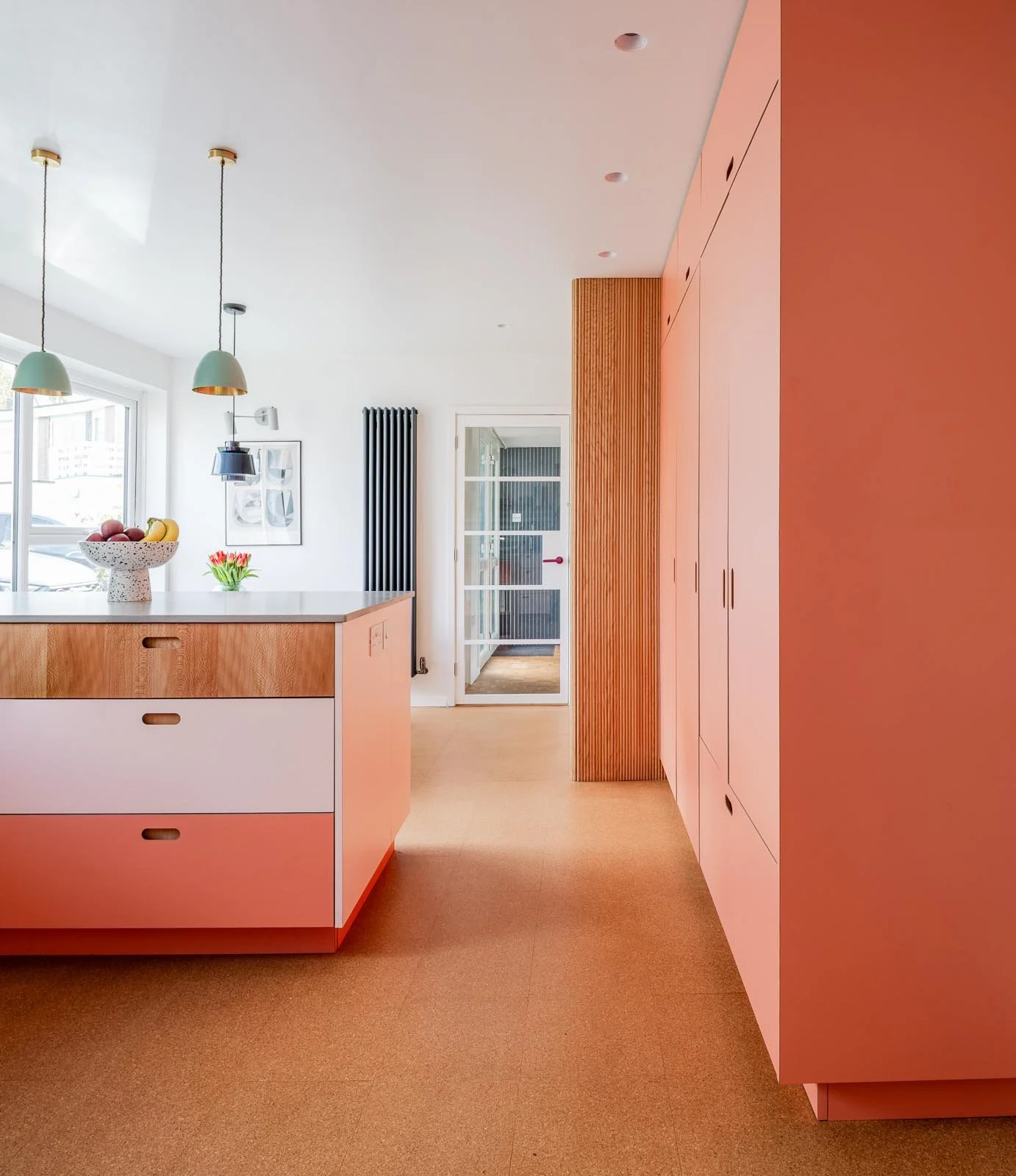
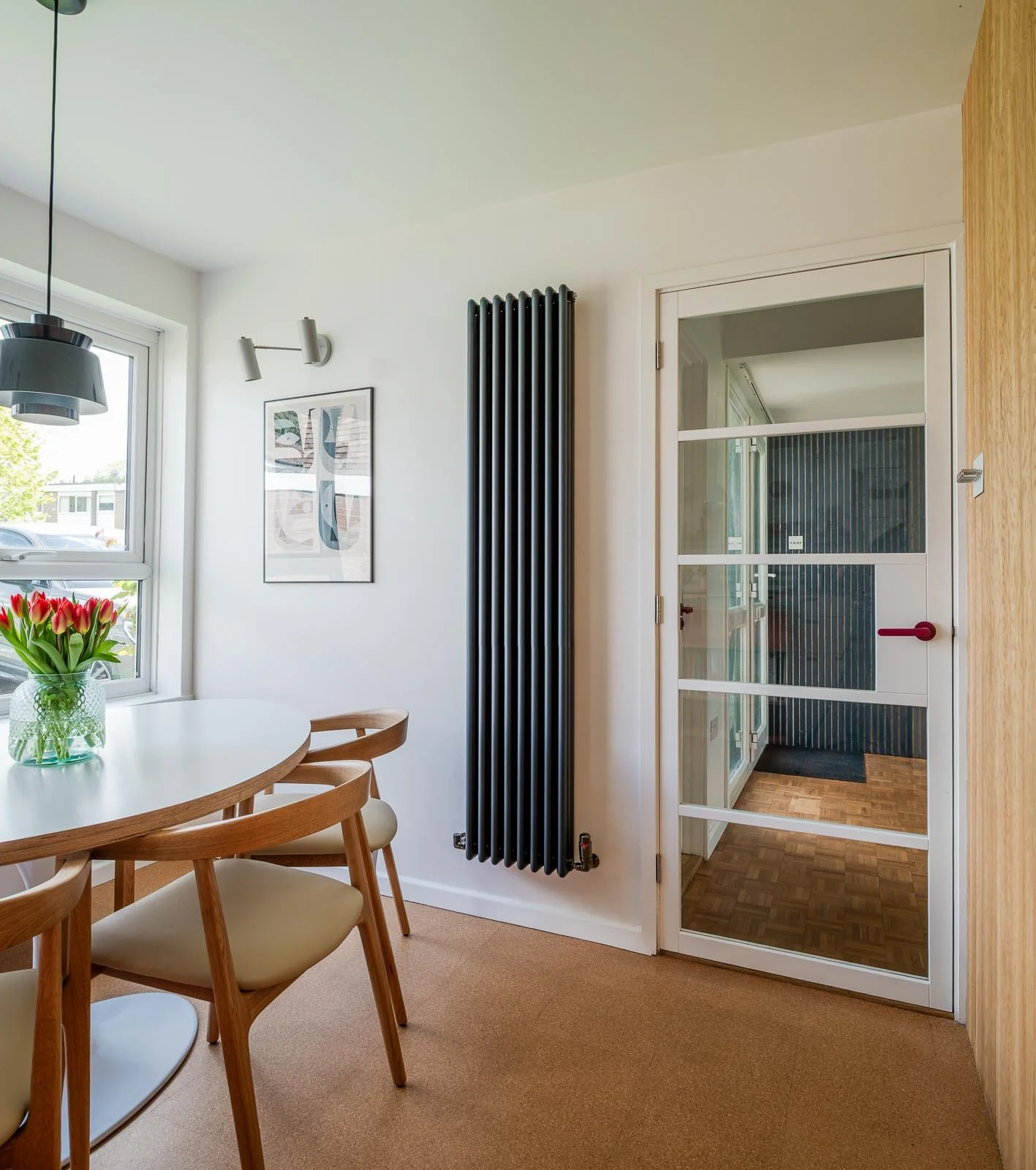
Bespoke lighting design? Doors hidden in panelling? Coral kitchen? Yes, yes, yes.
Did you do any work yourselves? (and also did you regret any work you did yourselves?)
Not this time. But we ran out of money to convert part of the garage into a utility room, so we will be taking that on ourselves later in the year.
What has been your biggest challenge so far that other renovators need to be prepared for (if the course helped with this, perhaps you could elaborate)
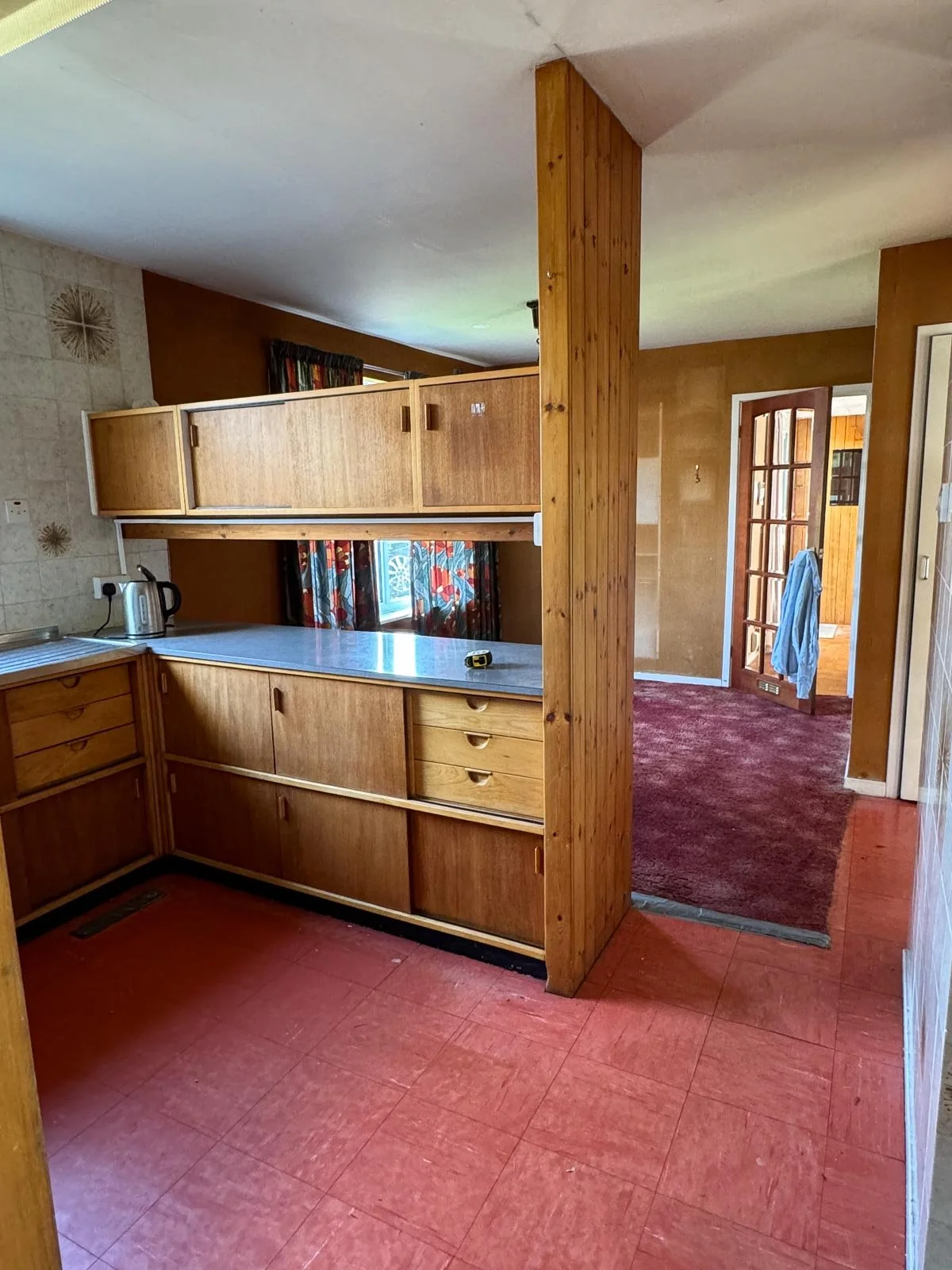
Although this is the newest property we've lived in, the house hadn’t been modified since it was built in 1967 so we had to work with the original features including a warm air heating system, Kandya kitchen, parquet flooring and asbestos. We also inherited 15 year old solar panels.
One of the biggest challenges was being sympathetic to its original character while making it work for modern family life and considering sustainability.
The reality is that period renovations often involve compromise. We'd have loved to adapt the existing warm air heating system with an air source heat pump and the solar panels. However we couldn’t make it work, and doing so would have meant ripping out original flooring and dealing with asbestos in order to install underfloor heating, so we had to accept that it wasn't the right solution for this house. Instead, we installed a new wet heating system, which inevitably meant sacrificing valuable wall space to radiators.
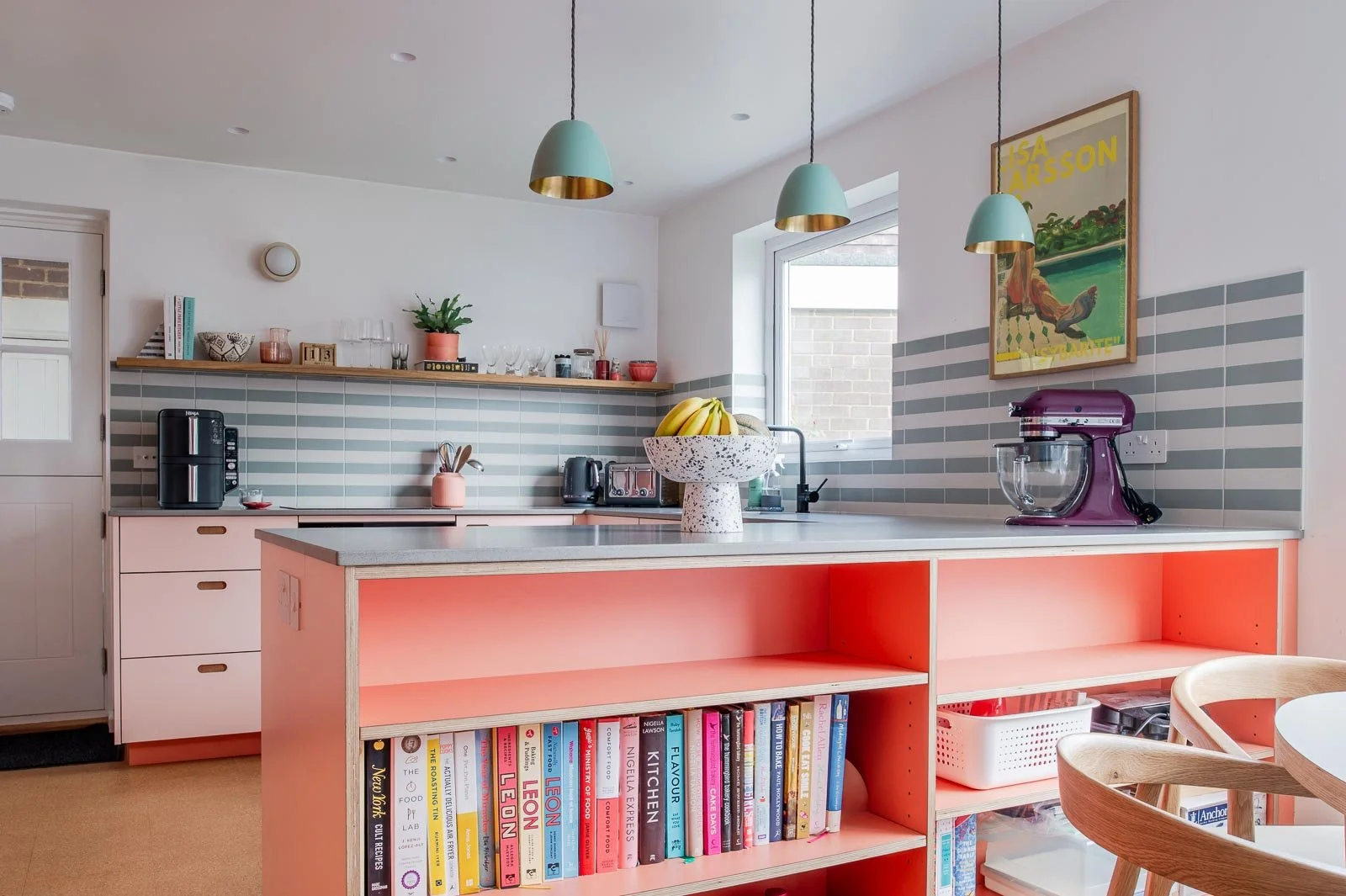
We seriously considered restoring the original Kandya kitchen, but it just wasn’t practical and couldn’t accommodate modern appliances. However we retained the cosy kitchen-diner layout rather than making it open plan and moved the internal French doors, creating enough space for full height units and integrated appliances.
Starting from scratch with heating, room layouts, electrics and lighting can feel overwhelming because every decision affects the next. The How to Renovate Course was invaluable in helping us think through the practicalities, particularly planning room layouts and radiator positions alongside our electrical and lighting schemes, avoiding expensive mistakes and making the compromises feel like informed choices rather than setbacks. This also meant we had detailed plans to give the contractors on site.
What are the first steps you recommend to a newbie renovator to start their projects?
Get a dimensional survey, if possible a 3D scan. Walls are never straight and nothing will fit perfectly if you don’t.
Get the basics rights – do as much research as you can and be prepared to spend a lot of money on hidden aspects of the project (asbestos removal, insulation, damp proofing). It can feel unrewarding, but it’s money well spent.
Document it at the time! We always thought we’d blog/photograph the process, but life got in the way so this has been a really nice exercise. Thank you!
What is the strongest emotion you connect with renovating your house?
Pride
What tips would you give our reader thinking about renovating a house?
Go in with your eyes open.
Plan as best as you can, but know that some plans will have to change.
Replastering is worth it.
What did you go over budget on and why?
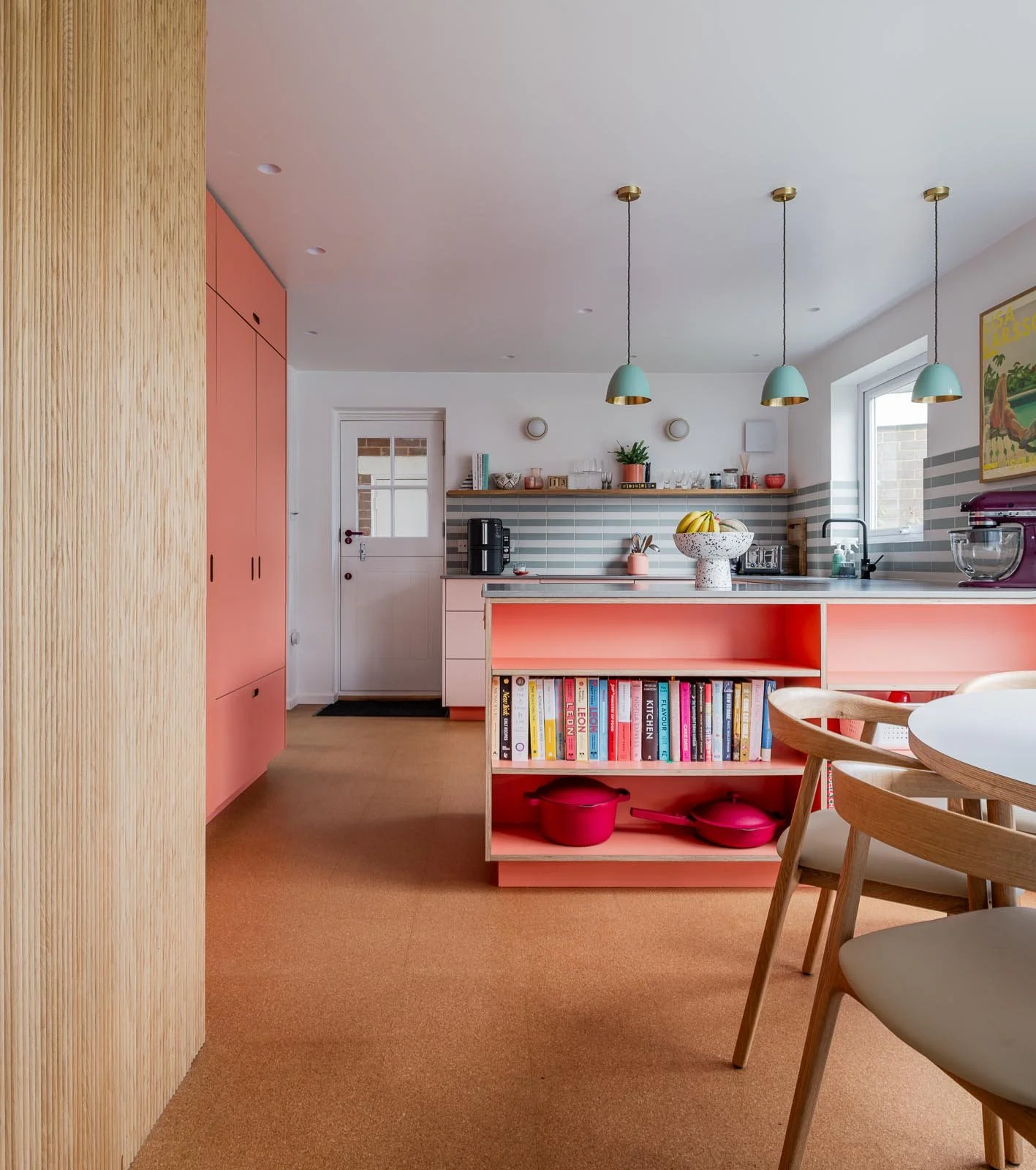
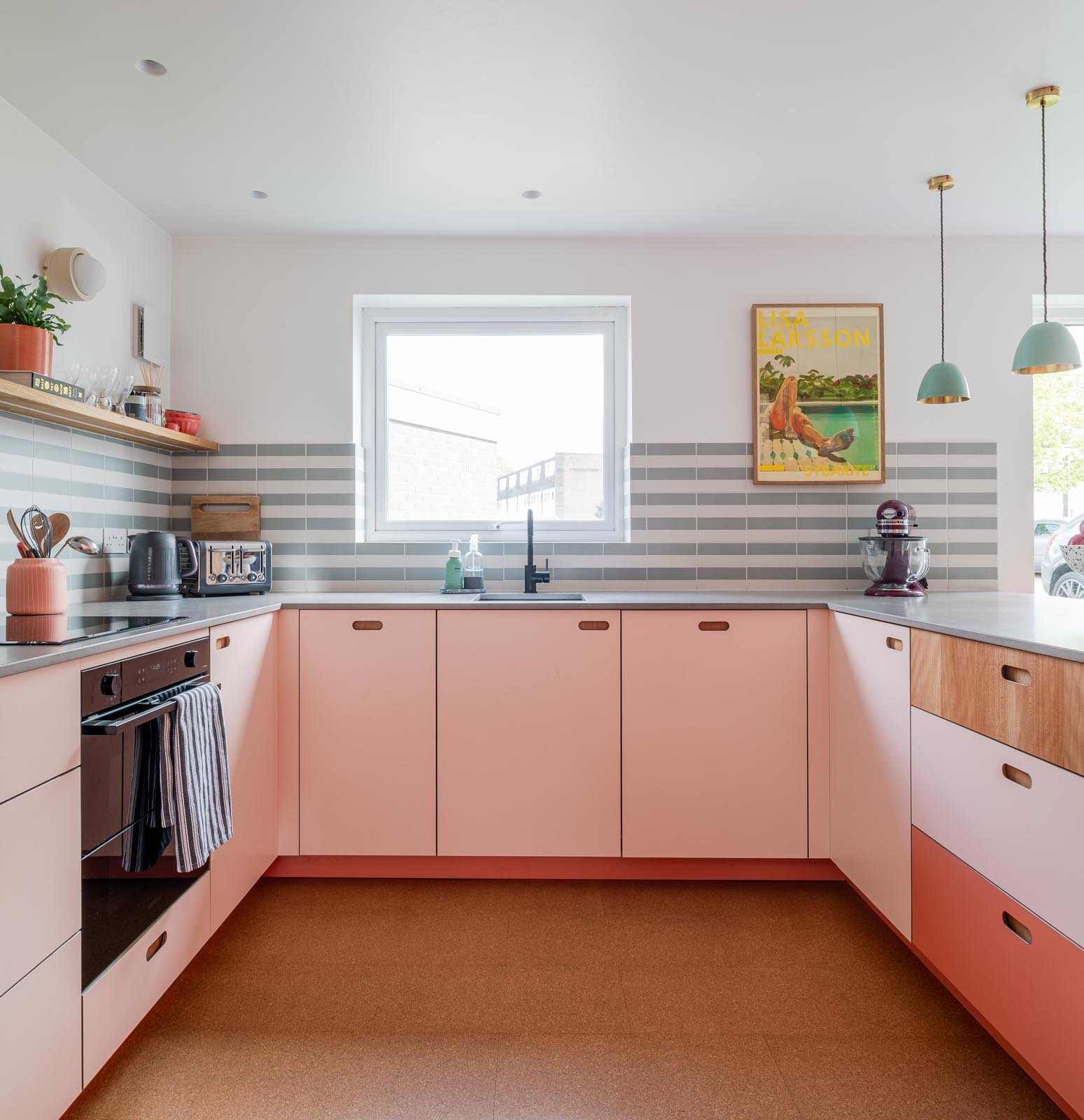
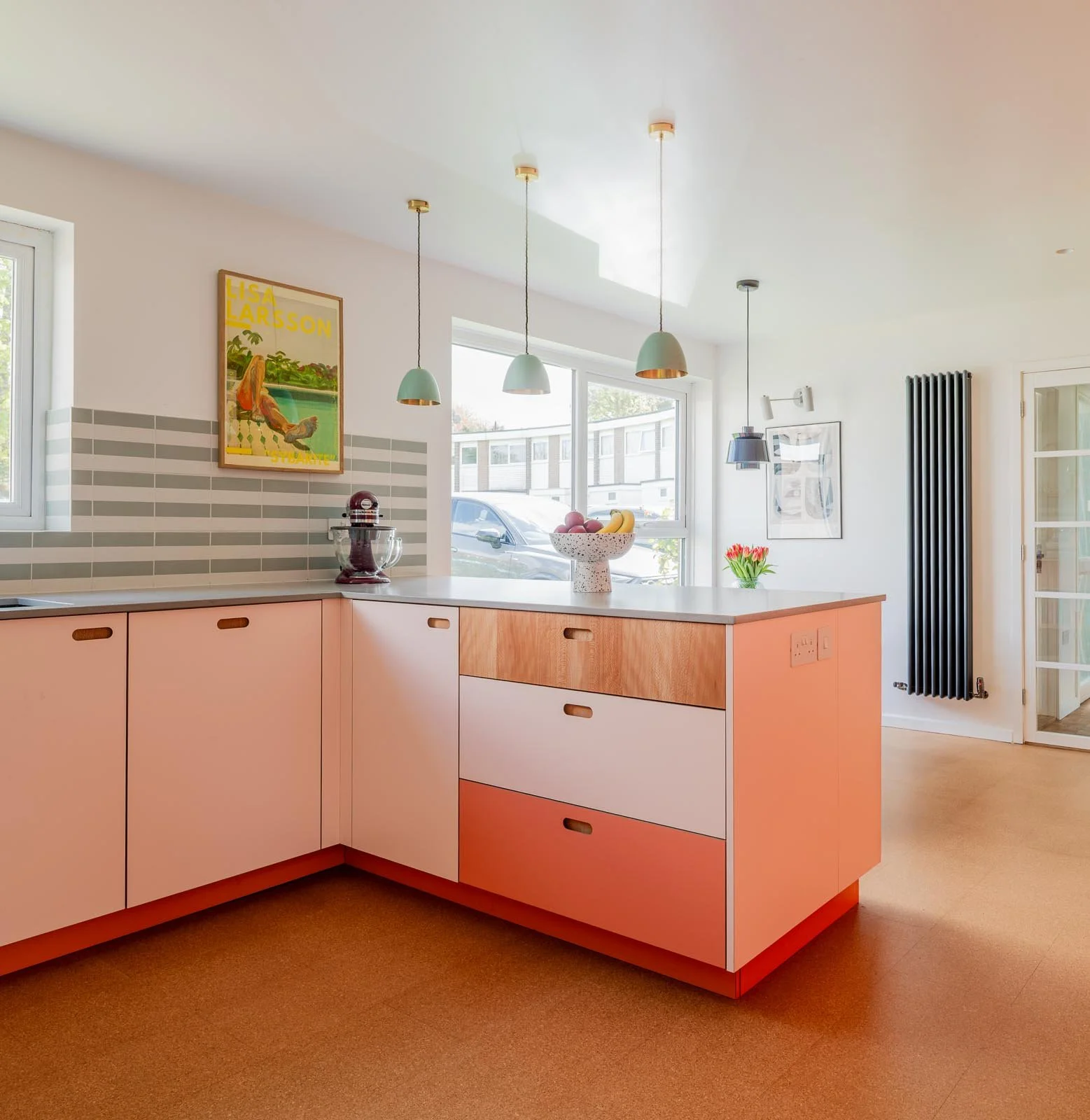
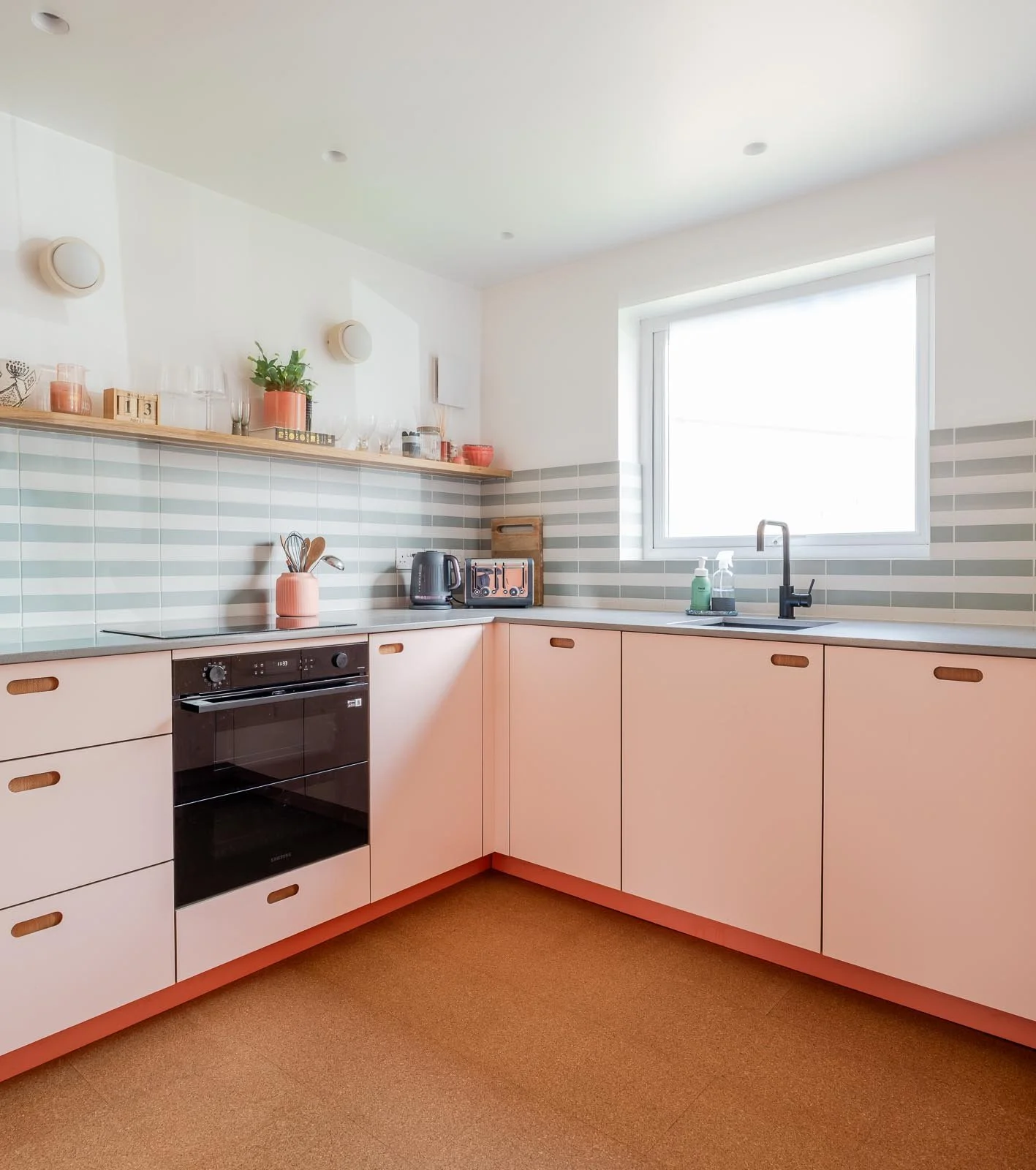
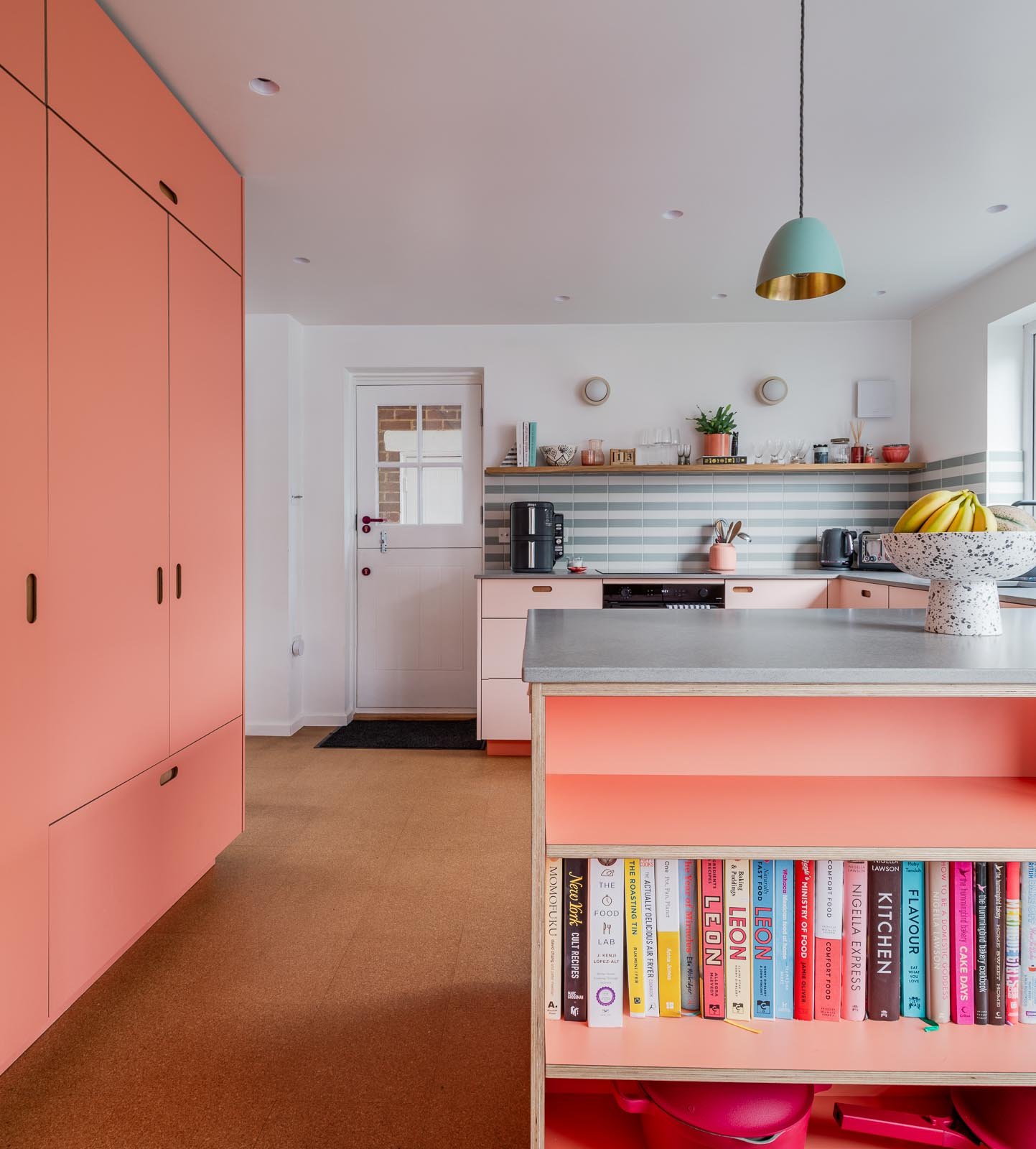
We knowingly overspent on the kitchen. A Pluck kitchen had been on my moodboard since our last renovation and we felt the exposed plywood finish and cork flooring was in keeping with the mid-century styling. We reduced the scope of the design (floating cupboard/shelving over kitchen island and banquette seating in the dining area) to allow this, but it was totally worth it. It’s my favourite space in the house and we enjoy being here every day.
What was the most rewarding aspect of your project and why?
Seeing it all come together, and somehow even better than we'd imagined. We spent an unreasonable amount of time thinking about the details – lighting, tiles, switches, door handles – and it’s satisfying to realise that all those tiny decisions do make a difference.
We went back and forth over the kitchen design. The colour choice felt really bold and there was always a temptation to play it safe and choose something more neutral for future owners. In the end, we trusted our instincts and designed a space that brought joy.
My advice? If you love it, you won’t regret it.
The finished house feels bright, warm and cohesive, and that's incredibly rewarding.
What was the most difficult decision you had to make while renovating?
The heating. We went round in circles for ages and it was frustrating that there wasn’t a perfect solution.
Knowing everything that you know now, would you go through your renovation again?
Absolutely. We planned to stay here for 7-10 years, but secretly can’t wait for the next project.
Where is your kitchen, worktops, lighting and flooring from?
Kitchen is from Pluck
Worktops are from Margrasil
Lighting is from Spark & Bell
Flooring is from Bailey Wighton
Want to create your dream space?

A step-by-step course + community for first-timers.
Plan your renovation confidently, save thousands & get your dream home design
Don’t miss this course enrolment. It’s the best way to set your project up for success. Join over 1,500 smart renovators creating their dream homes the easy way. Click through to learn more.
